
%402x.svg)
The Slippery Muse
The Slippery Muse. How to Write Something Good When You Can. I like Elizabeth Gilbert’s TED Talk, Your Elusive Creative Genius.
%402x%20(medium-dark).svg)
The Slippery Muse
How to Write Something Good When You Can
How the heck do we manage to write anything? How do we keep on writing when we’ve already tried so hard and written so much? That’s what I’m thinking about this week.
I like Elizabeth Gilbert’s TED Talk, Your Elusive Creative Genius.
https://www.ted.com/talks/elizabeth_gilbert_your_elusive_creative_genius
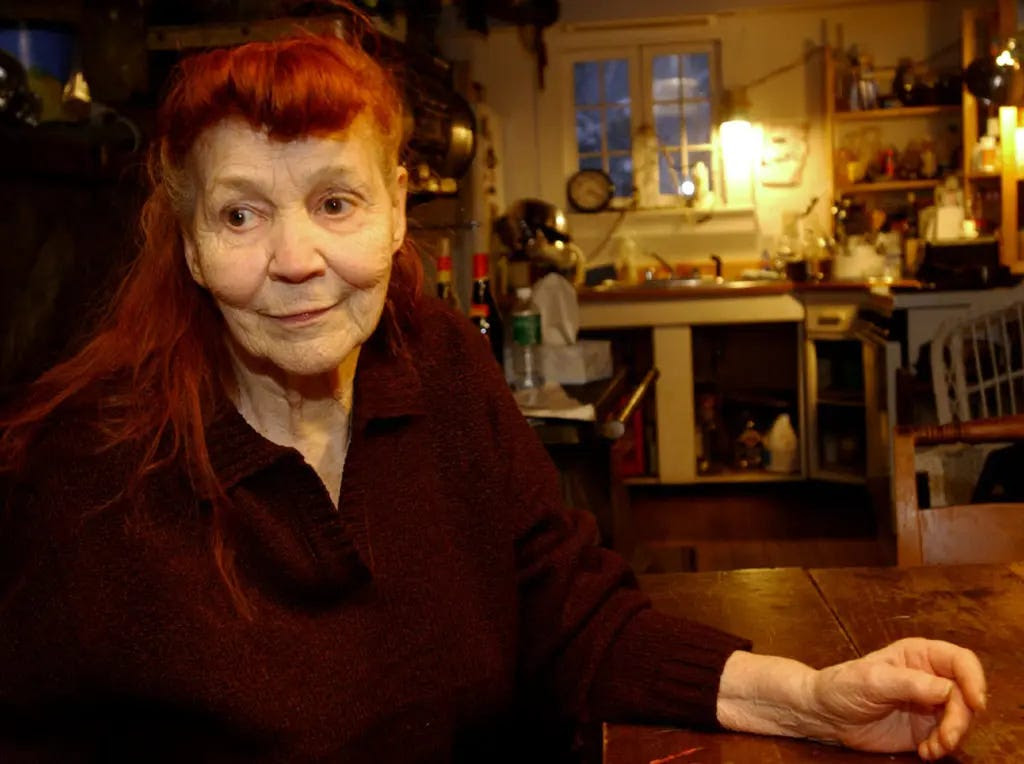
I especially like the part where she talks about the poet, Ruth Stone.
She says,
As [Stone] was growing up in rural Virginia, she would be out, working in the fields and she would feel and hear a poem coming at her from over the landscape. It was like a thunderous train of air and it would come barrelling down at her over the landscape. And when she felt it coming . . . ‘cause it would shake the earth under her feet, she knew she had only one thing to do at that point. That was to, in her words, “run like hell” to the house as she would be chased by this poem.
Come on, somebody. Can I get an Amen?
Does this stir you? Boy, it stirs me.
It also reminds me of something in the Bible.
“The wind blows where it wishes, and you hear its sound, but you do not know where it comes from or where it goes.”
John 3:8
This is not about writing. It’s about the Holy Spirit. But we Christian writers know that if only we can get a collab with God, our writing will be what it should be.
And if we don’t, well, words on a page that mean practically nothing.
But how?
Stone wasn’t talking about the Holy Spirit. She wasn’t even talking about ‘the Muse.”
Stone was being challenged by the poem itself. It was threatening her. Racing her. Willing to be caught if Stone was willing to “run like hell.” And willing to pass right by go who knows where.
My question for myself: am I willing to stop everything and run for the pen when God is trying to get my attention?
Amos said, “The lion has roared. Who will not fear? The Lord God has spoken. Who can but prophesy?”
Amos 3:8
Well, only those of us who don’t slow down to hear the lion, or worse.
We hear the lion, but we don’t bother to write it down.
I’m not implying that you and I are Old Testament prophets and are commissioned to write Scripture. But we are tasked with stewarding our story and the lessons learned from it.
I’ve ghost written over 130 books. Guess what the thesis is for the majority of these books.
Surrender…
And it does not matter what they think they are writing about: overcoming trauma, marriage, theology of work, prayer…you name it.
The epiphany is always surrender.
If surrender is so important to God, shouldn’t we surrender ourselves to the writing? To the lion’s roar when we hear it? To the poetry that “shakes the earth” under our feet and races us to a pen?
Yes, we should. Of course we should. But then, is that how most of us experience what comes to us?
Now Reverse It
The fact is that for many of us, it doesn’t work that way. We don’t actually get inspired in the fields and have to run for the laptop.
We are already at the laptop having committed to writing on Substack (or wherever) and we can’t think of anything to say? What about us?
If I’m staring at a blank page, does that mean God doesn’t speak to me?
No. I believe that God is always trying to speak to and through me.
And I can’t believe that God isn’t always trying to speak to and through you.
But abiding is no easy task (Jn 15), and abiding is what is usually required to catch a glimpse of what God is saying.
It’s not me and the blank page (screen).
It’s me, the blank page, my million racing thoughts, and the Holy Spirit somewhere waiting His turn to speak. Waiting for permission. Waiting for me to look His way and say, “I’m sorry, what were you saying?”
And guess what. One good way to do just that, to say to Him, “what were you saying,” is to force yourself to just write.
Because just sitting down and writing is a way to quiet the thoughts. To see through the noise and clear the fog between you and God.
So just write, and when you don’t know what to write, start with:
- writing observations
- writing memories
- writing prayers
- writing questions
- writing what is bothering you
- writing what you cannot stop thinking about
- writing the sentence you are afraid to write
- writing badly until something alive appears
One More Thing About Ruth Stone
Now that I think of it, without knowing more of the story, I bet Ruth went out to the field primed for the muse. I bet she had already sat down with the blank page and focused her attention. And I’ll bet what happened is that when she then got up and went out to move her body in manual labor, the thing could finally come to her because that’s how the brain works.
So let’s go there.
Researchers at Stanford University found walking significantly increased creative ideation. https://news.stanford.edu/stories/2014/04/walking-vs-sitting-042414
Why does this matter? Because neuroscience.
Why does neuroscience matter when it comes to being inspired by God? Because He made our brains and uses them in conjunction with our spirits when He speaks.
And it turns out that He created us to be able to prime the pump with hard thinking and then catch inspiration later when the body is moving and the mind is (finally) quiet.
If you try it—if you sit down to write and prime the pump, then go out into the field (or the yard, or the gym, or wherever you can move), let us know what happens. Let us read what you wrote next.
I pray you can run back to the house in time to catch it.
Jeff
We've got the answers for your questions
Publishing can feel overwhelming, but you’re not alone. Here are answers to common questions—if you need more help, just reach out!
At Indie Christian Book, our difference is rooted in two core commitments:
Excellence in Editing: We take exceptional pride in our thorough editing process. Your manuscript undergoes multiple stages of careful refinement—structural, content, line, and proofreading—ensuring your book reaches readers in its most polished and powerful form. We believe that meticulous editing honors both your message and your readers.
Personalized Guidance: We recognize that each author's journey is unique. Rather than applying a one-size-fits-all approach, we partner closely with you to understand the specific purpose God has placed on your heart. Your book receives individualized attention tailored to your particular vision, audience, and ministry goals.
This combination of editorial excellence and personalized care ensures that your published work truly reflects both your voice and God's purpose for your writing.
The timeline varies based on your book’s needs, but most projects take 4-6 months from manuscript to publication.
Yes! We offer platform development, book launch strategy, and promotional support.
Each project is unique—contact us for a custom quote tailored to your publishing needs.
We publish a wide range of faith-based books, including:
- Teaching Materials
- Memoirs & Biographies
- Devotionals
- Biblical Studies
- Ministry Resources
- Christian Living